

Updated May 11, 2026
What is a nipple shield and why would I use it?
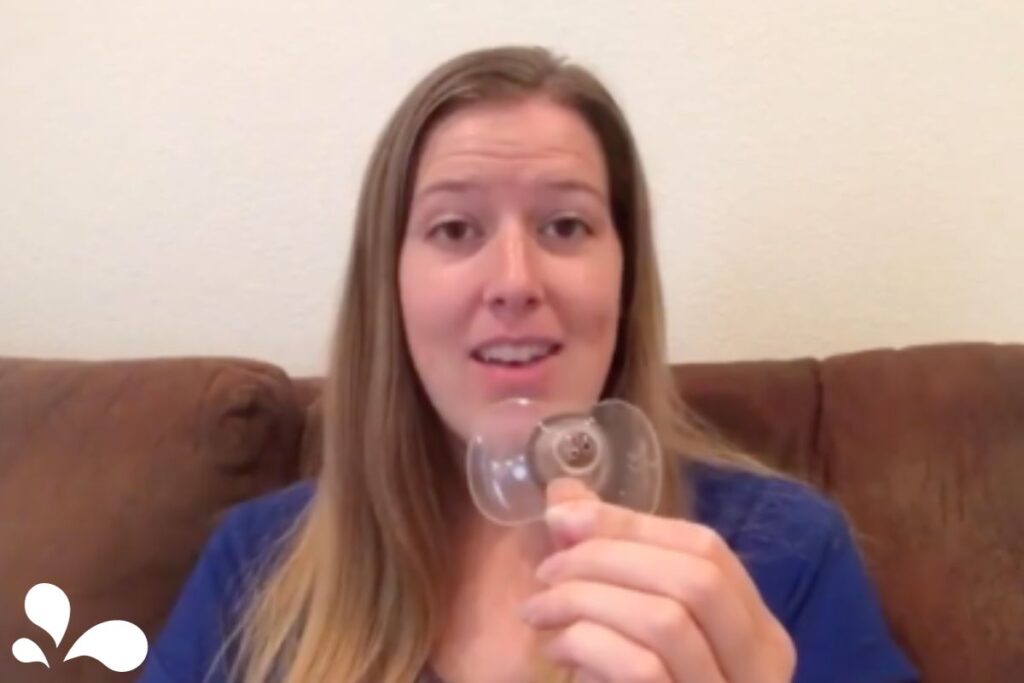
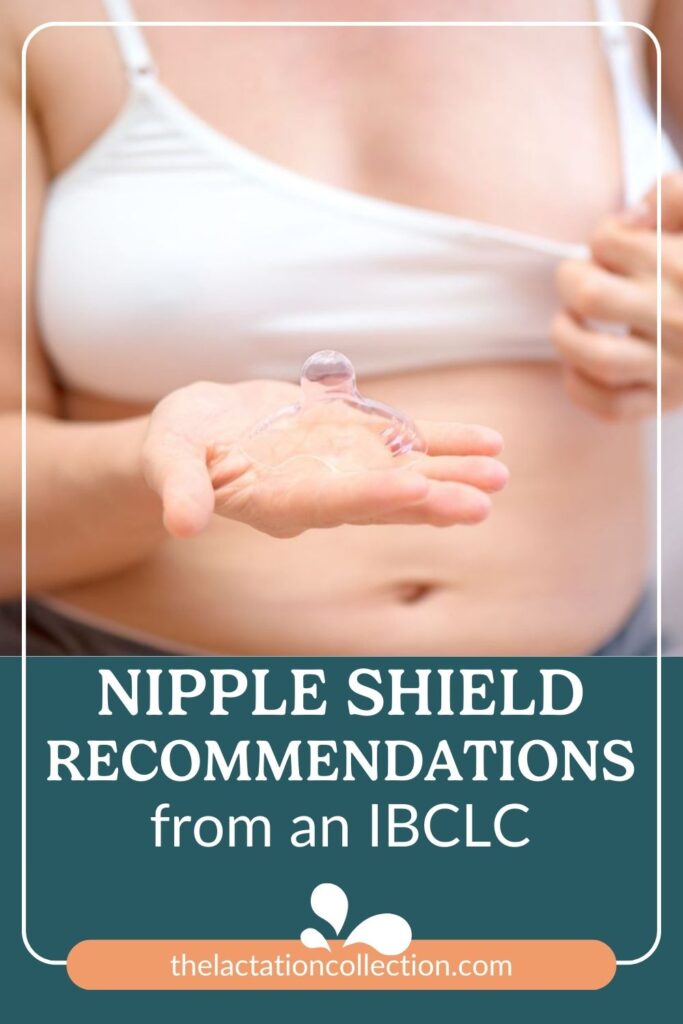
A nipple shield is a flexible silicone nipple that is placed over the mother’s nipple during breastfeeding. You might receive one in the hospital if your baby is having difficulty latching. Latching issues can be caused from tongue-tie or from inverted or flat nipples.
Nipple shields can be helpful if you have flat or inverted nipples, a preterm delivery, or a low-birth-weight baby.
They work best as a temporary bridge, not a permanent feeding tool. A nipple shield gives you a way to keep feeding while you and your baby work toward a direct latch. Our team of IBCLCs uses nipple shields in many of our flat and inverted nipple consultations, but never without a weaning plan built in from the very first visit.
Two misconceptions come up constantly in our consults:
- The first is that using a nipple shield means you’ve given up on or failed breastfeeding. You haven’t. It means you found a way to keep going.
- The second is that once you’re on a nipple shield, you’ll never get off it. For most parents, that’s not true. But getting off it does require a plan, the right technique, and often some professional support.
Below, we break down exactly how to use a nipple shield safely, how to protect your milk supply while using it, and how to wean from it when you’re ready.
When is a nipple shield actually needed?
Nipple shields aren’t right for every situation. We think they’re given out far more freely than they should be.
In the days right after birth, hospital IV fluids cause temporary breast engorgement that can flatten even normally protruding nipples. Many parents are handed a nipple shield in the hospital for what is actually a temporary, fluid-related issue, not true flat nipple anatomy. If this was your experience, there’s a good chance your nipples would have protruded on their own within a few days as the engorgement resolved.
That said, nipple shields are genuinely useful when:
- Your nipples are flat or inverted and your baby cannot achieve suction; the shield creates a firmer surface for baby to latch onto
- Your baby was born preterm or with a small mouth and needs the extra structure to create suction
- Your baby has a tongue or lip tie that is limiting latch depth while you await a tie evaluation or procedure
- Your baby is frustrated and refusing the breast entirely; the shield can reduce that frustration enough to get a feeding in
Will a nipple shield hurt my milk supply?
This is the question we get asked most about nipple shields. A nipple shield used correctly, with targeted pumping, does not necessarily reduce your milk supply.
Here’s what the evidence actually shows:
An observational study found that silicone nipple shields produced 80% breastfeeding success by Day 28. A 2024 study found that shield use, particularly in the early weeks without professional guidance, was associated with a higher risk of exclusive breastfeeding interruption before 6 months. The clinical summary from Oxford’s Centre for Evidence-Based Medicine states: “There is no consensus as to whether nipple shields are safe or helpful, and current guidelines rely on low-quality evidence.”
Sources:
https://www.ijcmr.com/uploads/7/7/4/6/77464738/ijcmr_1115_dec_21.pdf
https://pubmed.ncbi.nlm.nih.gov/38006626/
https://www.cebm.ox.ac.uk/news/views/nipple-shields-the-first-systematic-review-after-at-least-300-years-of-use
What that means in practice: the shield itself isn’t the problem. Using it without understanding how it affects milk stimulation, and without compensating for that, is where things go wrong.
When a baby latches onto a nipple shield, less of your nipple and areola tissue is being stimulated compared to a direct latch.
Less stimulation = less signal to produce milk. Over time, without a plan to maintain supply, some parents do see a drop.
How TLC approaches this:
Every time we recommend a nipple shield, we also recommend a regular pumping schedule to run alongside it. After each shield feeding (or at minimum, a few times a day) brief pumping keeps the breast stimulated and milk-production signals strong. We assess flange sizing at the same time, because an ill-fitting flange during pumping creates its own damage and inefficiency.
The TLC protocol at a glance:
- Use the nipple shield for the feeding
- Follow with 10–15 minutes of pumping, or use a wearable pump between feeds
- Check flange fit; this matters more than most people realize
- Weigh your baby at follow-up visits to confirm adequate milk transfer
Getting a good latch with a nipple shield
Using a nipple shield doesn’t automatically produce a good latch. Baby still needs to draw breast tissue into their mouth, not just the tip of the shield.
Signs that a shield feeding is going well:
- Baby’s chin is touching your breast, not hovering
- You can see baby’s jaw moving rhythmically, not just flutter-sucking at the tip
- You can hear swallowing within the first minute or two
- The shield doesn’t collapse inward or slip during the feed
- After 15–20 minutes, baby releases satisfied and drowsy
Signs something is wrong:
- The shield is filling with milk but baby seems frustrated
- Baby is nursing for 30+ minutes but still seems hungry
- Baby is gaining weight slowly
- You can see milk pooling in the shield with little swallowing
How to wean from using a nipple shield?
Weaning from a nipple shield is a process, not a one-time event. Most parents who work with us don’t completely eliminate the shield after the first visit, they gradually reduce dependence over days or weeks until direct latching becomes the norm.
Here’s the protocol we use with clients who have flat or inverted nipples:
Step 1: Prepare the nipple before every feed (with or without the shield)
For flat or inverted nipples, the nipple needs to be drawn out before baby latches. Do one of the following for 2–5 minutes before each feeding:
- Brief pumping – the most effective way to draw out a flat nipple and start milk flowing before baby even latches
- Manual stimulation – roll the nipple gently between your fingers, or use the “press back” technique: press the breast tissue back from the areola so the nipple protrudes
- Reverse pressure softening – if you’re engorged, push fluid back away from the areola before latching so the nipple has room to protrude
Step 2: Offer the breast without the shield first
Every single feeding. Even if baby only stays on for 30 seconds. If baby gets frustrated, use the shield, that’s what it’s there for. But always try first. That 30 seconds of unshielded practice, repeated 8 times a day, adds up.
Step 3: Start with your easiest feeds
The first feed of the morning (when your breasts are full, milk is flowing readily, and baby is calm but hungry) is your best opportunity to practice without the shield. Avoid trying to wean the shield during a tired or very hungry feed. Set yourself up to succeed.
Step 4: Try mid-feed removal
Once baby is actively nursing with the shield and you’ve heard several swallows, try gently sliding the shield off and continuing without it. Baby is already in a sucking rhythm and the nipple is often more everted from the suction. Many parents find this more successful than starting without the shield entirely.
Step 5: Track progress, not perfection
The progression we typically see in TLC follow-up visits:
Visit 1: Shield in use, wean plan established
Visit 2 (1–2 weeks later): Practicing without shield, some success at certain feeds
Visit 3: Reduced shield use, direct latch at majority of feeds
Visit 4+: Independent latch established; remaining work on supply and positioning
This visit progression data is derived from dozens of de-identified TLC case records. Special thanks to the TLC IBCLC Team members (Annalisa Burch, Ashley Lee, Cambria Garrett, Laura Franchow, Mindy Nunes) for providing their expertise.
Some babies wean from the shield on their own, particularly those who used it because of prematurity or small mouth size. As they grow, their latch mechanics catch up and the shield becomes unnecessary. For flat or inverted nipple cases, active weaning work is almost always required.
To give you even more help, you can read the transcript or watch the IGTV recording about nipple shields.
00:00 Hey Mamas. Today I am talking about nipple shields. And this is an example of a nipple shield. There are multiple sizes and shapes of nipple shields. This is just one kind of them, but I just wanted to show you guys kind of what they look like. So, with a Nipple Shield I kind of have a love-hate relationship with these. I feel that sometimes nurses and lactation consultants in the hospital will give these when it’s not necessary, and sometimes they are given for a good reason and very, very useful. So I’m going to be talking a little bit about both of those. But a Nipple Shield is just thin silicone nipple that has multiple holes in it here. And this goes over your nipple to help baby be able to latch on to the breast more easily. And sometimes baby will just latch onto the nipple. Sometimes they’ll do a good big latch and latch on really well to the breast as well.
01:14 And that makes it a little bit more effective and helpful. Because sometimes with the nipple shield, I find that it decreases nipple stimulation, which can decrease breast milk supply and decrease the amount of milk transferred to baby. So, I always recommend when using a nipple shield that you’re working with an IBCLC. And that is an international board certified lactation consultant. I am an IBCLC and sometimes the lactation consultants in the hospital are IBCLCs, but sometimes they are nurses that have had just a little bit of breastfeeding training and they don’t fully have breastfeeding certifications and the full scope of knowledge that an IBCLC has to be able to fully assess if a nipple shield is needed and what else might be able to help you better. So I always recommend talking to an IBCLC before using a nipple shield. If you are going to use a nipple shield, I recommend, with an IBCLC, doing a consultation where you do what’s called a, “weigh, feed, weigh” with baby.
02:39 So what they’ll do is they’ll weigh baby before they feed, then you’ll do a feeding with the nipple shield, then they’ll weigh baby after the feed and you’ll see how much milk is transferred. I have had multiple consultations with moms that use nipple shields with their babies. Sometimes I have had baby get a full three-ounce feeding in the 20 minutes that they eat, and that is great with the nipple shield. I have also had babies that have fed for 30+ minutes and only transferred a fraction of an ounce; and that is frustrating for both mom and baby. So obviously baby’s not getting enough food, but mom is feeling like they’ve been feeding for so long that babies should be getting enough food, not understanding why baby is still fussy, and then needing to supplement after and everything. And so it can cause lots of complications. Without having that knowledge that baby’s not getting enough milk.
03:44 It can cause baby to not grow well and have some failure-to-thrive issues, which is why it’s so important to work with an IBCLC when using a nipple shield so that you can know if baby is transferring enough milk or not. In the cases of breastfeeding going really well with nipple shields, and even when they’re not, working with an IBCLC to create a plan to wean off of the nipple shield is a great idea. I have had so many consultations where the biggest complaint of the nipple shield is how difficult it is to use, especially when wanting to breastfeed in public, someone going out of the house and needing to use it. It can be difficult. It fills with the milk and then it can spill all over when you’re trying to take it off and different things, so it can be really complicating and frustrating to use one of these at times.
04:42 And so creating a plan to wean baby off is great. Some babies will just wean off on their own, which is amazing, and will just be able to go right to breastfeeding without the nipple shield, without any complications. In those cases, it’s often because the nipple shield was used because baby was born a little premature or a little bit small and had a small mouth, which is why you were using this to help them breastfeed in the first place. And so as they get older and bigger and their mouth gets bigger, they’re able to get onto the breast without the nipple shield a lot more easily. In some cases, like those with flat or inverted nipples, it can be a little bit more tricky, and creating a plan and a process to help pull the nipples out before breastfeeding can help to wean off the nipple shield more easily; and again, I cannot stress it more.
05:45 That’s why it’s so important to work with an IBCLC when using a nipple shield so that you can know how to use it, that you’re using the right size. I mentioned that these come in different shapes and sizes, and you want to make sure that you’re using the right size for your nipple so that it can work the best that it can. And then creating a plan to wean and and working with the IBCLC to know that baby is transferring enough milk. So, with all of that information you can see why sometimes using a nipple shield is a little bit more complicated. And if you are having difficulties with breastfeeding in the hospital or right after baby is born, I would not use this as a first go-to solution. Make sure that you are being fully assessed; both you, your baby, and the feeding to see that baby is latching well. And if that’s an issue, there are different ways to help baby latch well. It could be tongue tie or lip tie issue that if that is resolved can then help with the feeding without using a nipple shield. It can be a couple of different things. With…If baby’s mouth is just a little bit too small, Um, just assessing how the feeding is actually going. Assessing baby’s mouth, how their tongue moves, and all of those can really play into how a feeding goes. And if you get a full, good assessment, we can figure out how to fix it, possibly without using a nipple shield.
07:33 If a nipple shield is still needed, then that’s fine, but we want to make sure, again, baby is getting enough milk transferred with that feeding. And so, always work with an IBCLC to help with the nipple shield to know that it’s working properly, that things are going well with the milk transferring, baby’s gaining weight appropriately, having enough wet and poopy diapers, and that breastfeeding can then…we can have a plan to wean off of this, to have just breastfeeding without the nipple shield and have you have the best breastfeeding journey and experience that you can, and the breastfeeding journey that…an experience that you want. So if you have any other questions about nipple shields, please let me know. Send me a message and I will be happy to answer them for you. Thanks mamas.
When to contact an IBCLC about your nipple shield
A nipple shield works best as a supervised tool, not a solo one.
Contact an IBCLC if:
- Your baby is feeding for 30+ minutes but seems unsatisfied after
- Your baby is not regaining birth weight by 2 weeks, or is losing weight
- You’re seeing fewer wet or dirty diapers than expected (At least 6 wet diapers and 3-4 dirty diapers per day…read more here.)
- You’ve been on the shield for more than 4 weeks with no progress toward weaning
- You’re experiencing nipple pain, cracking, or plugged ducts while using the shield
- You feel completely dependent on it and don’t know how to move forward
At TLC, we see nipple shield cases across every stage: in the hospital, in the first days home, and weeks or months in. If you’re struggling, that’s what we’re here for.
Originally posted August 22, 2019

DNP, CNM, WHNP, IBCLC, CEIM
I've had three IVF miracle babies, including twins.