

Does your baby have a tongue or lip tie?
Does baby click and slip off the breast no matter what you try? Did someone say “tongue tie” and now you don’t know what to believe?
You’re not alone.
IBCLCs (the highest lactation qualification)















You’re not alone
About 1 in 10 mamas who reach out to us ask about a tongue or lip tie.
We understand.
Many internet sources say every feeding problem is a tie. Your doctor might say it’s nothing. You’re stuck in the middle with a baby who still won’t feed well.
How the tongue moves matters more than how it looks.
That’s exactly what we check.
Your baby might have a tongue or lip tie if…

Baby clicks or smacks while nursing

Baby slips off the breast or can’t stay latched

Feeds are long and exhausting, and baby still acts hungry

Baby gulps air, then deals with gas, spit-up, or fussiness

Your nipple comes out creased, pinched, or lipstick-shaped

Nursing hurts, even after working on the latch

Baby can’t lift or stick out their tongue, or the tongue looks heart-shaped

Your supply is dropping because milk isn’t being removed well

Your pediatrician said the tie is “nothing,” but feeding still isn’t working
Sound familiar?
One sign alone doesn’t mean a tie. A cluster of them means it’s time for a real check.
We can help →
What is a tongue tie, in plain words?
Inside every mouth are small stretches of tissue that anchor the tongue, lips, and cheeks. Each one is called a frenulum. That’s normal; everyone has them. A “tie” is when one of these is so short or tight that it restricts the movement needed for proper feeding.
Ties can show up in three places:
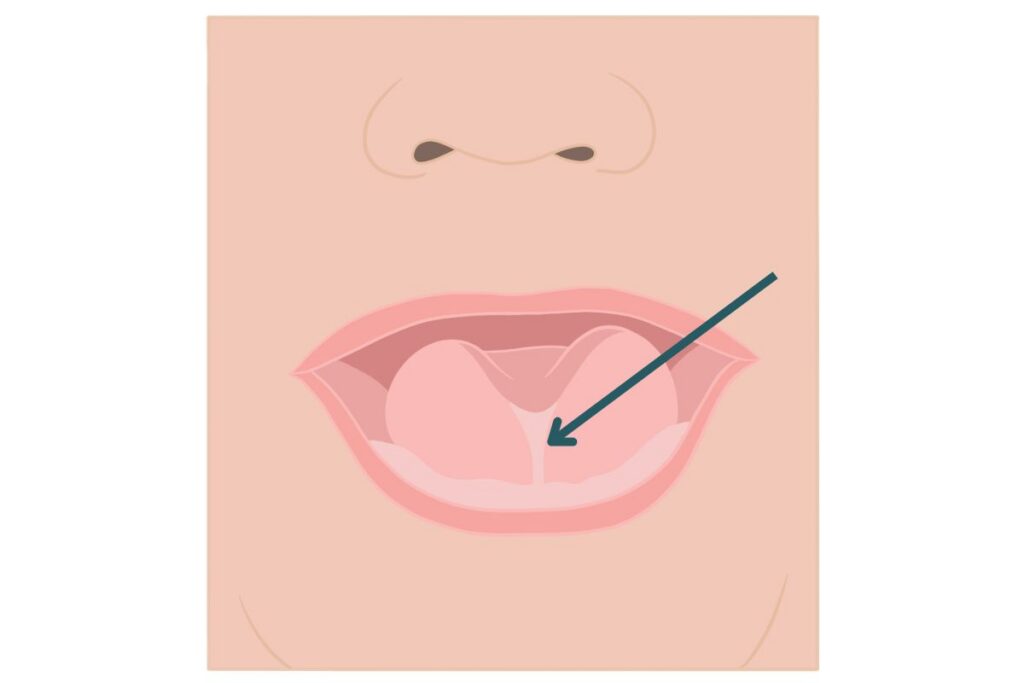
Tongue tie
The most common tie, and the one most researched. The medical word is ankyloglossia.
To breastfeed well, baby’s tongue has to reach out, cup the breast, and move in a wave to draw milk out.
If the tongue is held down, baby may pinch, chew, or slip off instead. That can cause sore nipples for you and hard work that removes little milk for baby.
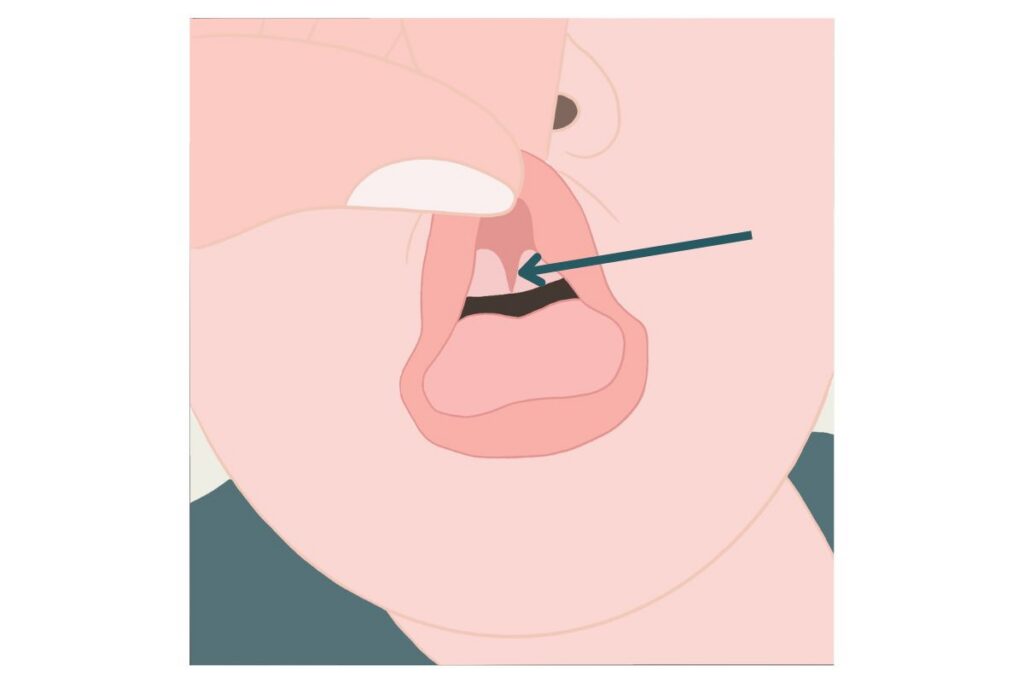
Lip tie
The same idea, but under the upper lip. If the lip can’t flare out, baby can struggle to make a good seal and swallow air instead.
Upper lip ties get blamed often, but they cause fewer feeding problems than tongue ties, and they rarely need treatment on their own.
We check the lips as part of the whole picture.

Cheek tie
The least common and least understood. Cheek ties (the medical word is buccal ties) connect the inside of the cheeks to the gums.
There’s very little evidence that they affect feeding, and most experts say they rarely need treatment.
We’ll look, but we won’t send you to a procedure over a cheek tie alone.
Here’s the part many parents never hear: A tie is about function. How the mouth looks isn’t the same as how it works. Plenty of babies with tight-looking tongues feed just fine. Some babies with normal-looking tongues struggle. That’s why a simple glance at the mouth isn’t enough, and why we watch a real feed to understand.
Does every tongue tie need to be released?
No. The American Academy of Pediatrics said it clearly in 2024: tongue ties are being overdiagnosed and overtreated, and most breastfeeding problems are caused by something else. If baby has a tie but feeds well and you’re comfortable, nothing needs to be done.
A release makes sense when both things are true:
- The tongue is truly restricted, and
- Feeding problems continue even after skilled latch and positioning help
That’s the order TLC follows. Many latch problems that look like ties get better with feeding help alone. And when a release really is needed, you’ll know it’s for the right reason.
If pain is your main symptom, start with our painful latch page.
If your nipples are damaged, see sore, cracked & bleeding nipples.
Try these tonight if you suspect a tie
These are the first steps our IBCLCs coach in care plans. They are the first steps to take while you wait for a real check.
- Aim for the deepest latch you can. Nose to nipple, wait for a wide open mouth, bring baby in chin first. A deeper latch helps every baby, tie or no tie.
- Try laid-back positioning. Lean back and let baby’s chin press into the breast. Gravity helps the tongue do its work.
- Watch a feed like a detective. Listen for clicking, watch for milk leaking from the corners of the mouth, and check your nipple’s shape after the feed. Notes and a short video help your IBCLC a lot.
- Count wet diapers. Six or more in 24 hours after the first week means your baby is getting enough milk.
- Protect your supply. If feeds feel weak or short, add a pump session or two so your body keeps getting the “make milk” signal.
- Don’t book a procedure first. Get a feeding check before a release, not after. The AAP recommends the same order.
If feeding doesn’t improve within a few days of better latch and positioning, it’s time for a full check.
When should you get help for a tongue or lip tie?
Reach out to an IBCLC (and your pediatrician) if you notice:
- Pain that continues after working on latch and positioning
- Baby isn’t gaining weight well, or feeds take an hour and baby still seems hungry
- Clicking, gulping, or gas at most feeds
- Your supply is slipping and you don’t know why
- Baby already had a release and feeding still isn’t better
- You were told “no tie” or “it’s nothing,” but your gut says something’s off
You don’t have to wait until it’s bad. The sooner the real cause is found, the sooner feeding can feel good again.
What a tongue & lip tie consult with a TLC IBCLC looks like
When you come to us with tie questions, your IBCLC will:
- Watch a full feed, start to finish, because function shows up during feeding, and a quick look in the mouth can miss it
- Check how baby’s tongue moves: reach, lift, cupping, and the wave motion that moves milk
- Weigh baby before and after the feed to measure exactly how much milk baby transfers
- Work on latch and positioning first. Many “tie” problems improve without any procedure
- Refer you to a trusted pediatric dentist if a release is truly needed. We work with providers we know and trust, and we’ll send you with notes so nothing gets lost
- See you again 1 to 3 days after a release to retrain the latch, because a release frees the tongue, and then baby has to learn to use it
- Protect your milk supply through the whole process, with a pump or supplement plan if baby needs help in the meantime
Pick what works for you: a visit in your own home, or a virtual consult from anywhere. Many insurances accepted. If needed, we can help you check your coverage.


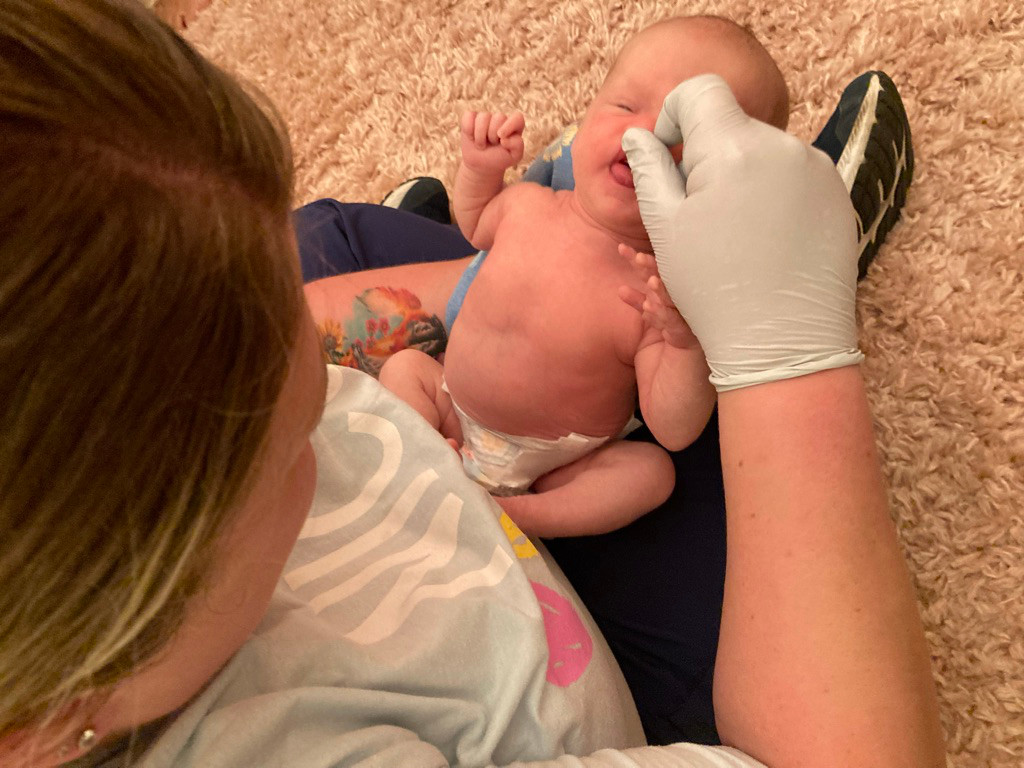



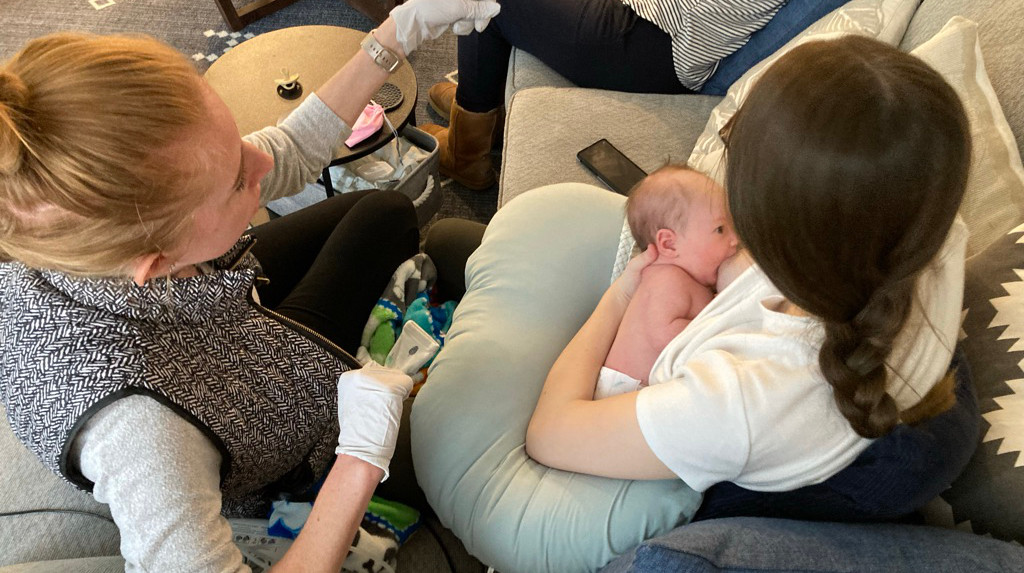

Other mamas like you have had great experiences with our IBCLCs
Wondering about a tongue tie? Get real answers.
One watched feed tells you more than a hundred opinions online.
Many insurances accepted.
Tongue & Lip Tie FAQs
-
My pediatrician looked and said there’s no tie. Could there still be a problem?
Maybe. A quick look at the mouth checks how the tongue looks at rest. It can’t show how the tongue works during a feed. If feeding still hurts or baby isn’t transferring milk well, a watched feed with an IBCLC is the next step.
-
Does every tongue tie need to be released?
No. Around 8% of babies have a tight tongue, and fewer than half of them have feeding trouble. If baby feeds well, no treatment is needed. A release makes sense only when the tongue is restricted and feeding problems continue after skilled help.
-
What is the release procedure like?
It’s called a frenotomy. A pediatric dentist or doctor frees the tight tissue, often with a laser, in a matter of seconds. It’s considered safe, and baby can usually feed right away. We refer to pediatric dentists we know and trust.
-
Will the release fix breastfeeding right away?
Often pain improves quickly, but the release alone isn’t the finish line. Baby spent weeks feeding with a held-down tongue and needs to relearn. That’s why we see you again 1 to 3 days after a release to rebuild the latch.
-
What about lip ties and cheek ties?
Upper lip ties get blamed often, but the evidence for treating them is weaker than for tongue ties. Cheek (buccal) ties have even less evidence behind them and rarely need treatment. We check all three along with the whole feeding picture before anything else.
-
Is clicking during feeds always a tie?
No. Clicking can come from a shallow latch, fast letdown, or positioning. One sign alone proves little. It’s the cluster, like clicking plus pain plus poor weight gain, that points to a tie.
-
Do you take insurance? Can you come to my home?
Yes. We work with The Lactation Network, Wildflower, and other insurers. Check the logos on the back of your insurance card. We offer visits in your home and virtual consults. We’ll help you check your coverage when you book.
Other issues related to tongue & lip ties

Sources: