
Worried you’re not making enough milk?
Do you watch the clock and wonder if your baby got enough? Does every fussy evening feed feel like proof that your supply is failing?
You’re not alone.
IBCLCs (the highest lactation qualification)















You’re not alone
About 1 in 4 mamas who reach out to us mention doubts or concerns about milk supply. We understand.
When you can’t see the ounces, it’s easy to fear the worst.
Most worried mamas are making more milk than they think.
And if supply really is low, it can usually be built back up.
You might be worried about low milk supply if…

Baby seems hungry again right after a feed, or feeds “all the time”

You pump less than you expected and fear that’s all you make

One side makes much less than the other (the “slacker boob”)

Your breasts feel softer than before, or you’ve stopped leaking

Your supply dropped after going back to work or skipping a few feeds

Baby’s weight gain is slow, or your doctor mentioned supplementing

You’re triple feeding (nurse, pump, bottle) and you’re out of energy

You bought teas, cookies, or supplements and still feel unsure
Sound familiar?
You don’t have to push through it.
We can help you stop worrying →
How do I know if my baby is getting enough milk?
You can’t measure the milk removal at the breast, so watch baby instead.
These three signs tell the real story:
- Wet diapers: After the first week, 6 or more wet diapers in 24 hours is a good sign.
- Weight gain: Steady gain on baby’s growth curve matters more than any single feed.
- Swallowing: You can hear and see baby swallow during feeds, and baby seems settled after most feeds.
Fussy evenings, cluster feeding, and short naps are normal newborn behavior. On their own, they don’t mean low supply.
What causes low milk supply?
Milk works on demand and supply. The more milk that leaves the breast, the more your body makes. So most real supply problems trace back to milk not being removed often enough or not well enough.
Here’s what’s usually going on…

Baby isn’t removing milk well
A shallow latch, a sleepy feeder, or a tongue or lip tie can mean baby nurses for an hour but transfers little.
Your body then gets the message to make less.
If you’re also struggling with pain at latch, see our painful latch page.

Feeds became spaced out
These can all quietly lower the “demand” signal:
- Longer stretches between feeds
- A new work schedule
- Sleep training
- A nipple shield used without a plan
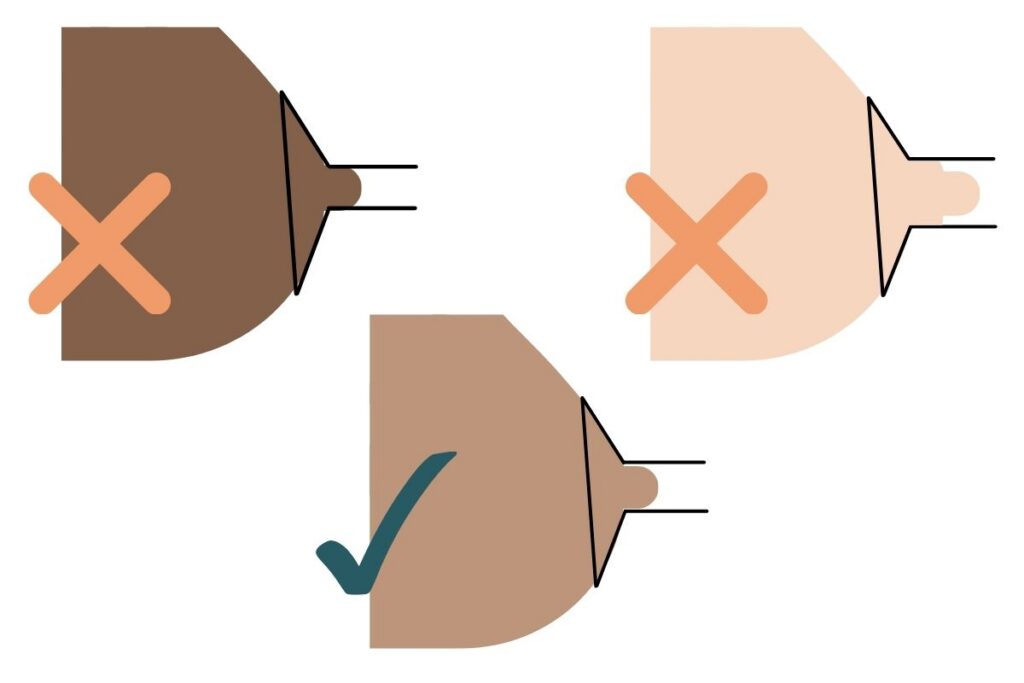
Your pump isn’t doing its job
The wrong flange size or a worn-out pump can remove far less milk than baby would.
If you pump a lot, your pump setup matters as much as your supply.

Health and hormone causes
Less often, issues like thyroid problems, PCOS, past breast surgery, or retained placenta play a role.
These deserve a closer look with your IBCLC and doctor.
Start these tonight if you’re worried about supply
These are the first steps our IBCLCs coach in care plans. They are the first steps to take to improve supply.
- Add milk removals, gently. Aim for about 8 or more feeds or pump sessions in 24 hours. Frequency beats marathon sessions.
- Offer both sides each feed. When baby slows down, burp, switch sides, and use breast compressions to keep milk flowing.
- Keep baby skin to skin. It cues feeding hormones for both of you.
- Use your hands when you pump. Massage before and during pumping. Hands-on pumping removes more milk.
- Check your flange size and pump parts. A bad fit or old valves can reduce your output.
- Track diapers, not ounces. Count wet diapers for two or three days before you judge your supply.
- Don’t drop feeds to “save up” milk. Spacing feeds lowers your supply. Drink to thirst, eat well, and rest when you can. Drinking extra water beyond thirst doesn’t increase milk production.
Supply usually adjusts in days, not hours. If nothing changes within a few days, it’s time to accurately measure actual milk removal.
When should you get help for low milk supply?
Reach out to an IBCLC (and your pediatrician) if you notice:
- Fewer than 6 wet diapers in 24 hours after the first week
- Baby is not gaining weight, or is dropping on the growth curve
- Feeds are painful, or baby never seems to swallow much
- Your supply dropped suddenly and hasn’t come back in a few days
- You’re triple feeding with no end in sight and burning out
- You’ve had breast surgery or a health condition that may affect milk, and you want a plan
You don’t have to wait until it’s bad. The sooner your milk removal improves, the easier your supply is to rebuild.
What a lactation consult for low milk supply with a TLC IBCLC looks like
When you come to us worried about supply, your IBCLC will:
- Weigh baby before and after a feed to measure exactly how much milk baby transfers; no more guessing
- Watch the full feed and find what’s limiting milk removal: latch, sleepiness, a tie, or the pump
- Check your pump setup, including flange size and settings, if pumping is part of your routine
- Build a plan that feeds baby and rebuilds supply at the same time, using top-ups by bottle or an at-breast supplementer so nursing continues
- Talk supplements only when they make sense. For most mamas we’ve helped with supply, the first plan includes no supplement at all. When one fits, we often suggest specific Legendairy Milk blends
- Follow up and adjust, with a clear exit ramp if you’re triple feeding
Pick what works for you: a visit in your own home, or a virtual consult from anywhere. Many insurances accepted. If needed, we can help you check your coverage.








Other mamas like you have had great experiences with our IBCLCs
Stop guessing about your supply. Let’s measure it.
One weighed feed can tell you more than a week of worry.
Many insurances accepted.
Low Milk Supply FAQs
-
My baby wants to eat all the time. Does that mean my supply is low?
Usually not. Newborns cluster feed, especially in the evening and during growth spurts. It’s how they “order” more milk for tomorrow. Watch wet diapers and weight gain instead.
-
I only produce a little when I pump. Is that all the milk I make?
No. A pump is not a baby. Babies remove milk better than any pump, so pump output runs lower than what baby gets at the breast. Output also dips normally when supply settles around 6 to 12 weeks.
-
My breasts feel soft now and I stopped leaking. Did my supply drop?
Probably not. Around 6 to 12 weeks, supply adjusts to match what baby needs. Softer breasts and less leaking are normal signs of that change.
-
Do supply teas, cookies, or supplements work?
Milk removal drives supply, so we start there. For most mamas we’ve helped with supply, the first plan includes no supplement at all. When one fits your situation, we’ll suggest a specific blend and a way to see if it’s helping.
-
How fast can I increase my milk supply?
Most mamas see a response within a few days of more frequent, better milk removal. Rebuilding after a longer dip can take a week or two. A steady rhythm wins.
-
Is triple feeding worth it?
It can be, for a short time. It keeps baby fed while you rebuild supply. But it’s exhausting, so it needs a clear plan and an end date. We’ll help you build the exit ramp.
-
Do you take insurance? Can you come to my home?
Yes. We work with The Lactation Network, Wildflower, and other insurers. Check the logos on the back of your insurance card. We offer visits in your home and virtual consults. We’ll help you check your coverage when you book.