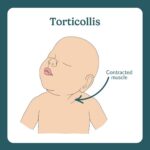
torticollis

Torticollis
Torticollis, also known as "wry neck," is a condition where a baby's neck muscles are tight, causing their head to tilt to one side.
This can make it difficult for your baby to turn their head and may affect breastfeeding positions. Torticollis can result from various causes, including the baby's position in the womb, birth trauma, or muscle abnormalities.
What to watch out for
Signs of torticollis in your baby
Look for signs such as your baby consistently tilting their head to one side, difficulty turning their head, or preferring to look in one direction. You might also notice a flat spot on one side of their head due to lying in the same position. If you see these signs, it’s important to consult with your pediatrician for an evaluation and appropriate treatment.
Impact on breastfeeding
Torticollis can make breastfeeding challenging because your baby may have difficulty latching on one side or finding a comfortable feeding position. To address this, try different breastfeeding positions to find what works best for you and your baby. For example, you can try the football hold or the side-lying position, which might be more comfortable for your baby. Learn more about breastfeeding positions.
Physical limitations or health circumstances
Treatment and management
Treatment for torticollis often includes physical therapy to stretch and strengthen the neck muscles. Your pediatrician or a pediatric physical therapist can provide exercises and stretches to help improve your baby's neck mobility. In some cases, they may also recommend gentle massage or positioning techniques to encourage proper head movement.
When to seek professional help
If you notice any signs of torticollis in your baby, it’s important to seek professional help early. Early intervention can improve your baby’s neck mobility and prevent further complications. Most babies respond well to physical therapy, and with consistent treatment, they can usually overcome torticollis within a few months.
Other terms
Here are some related terms that might help you better understand torticollis and its impact on breastfeeding:
- Physical therapy: Treatment that uses exercises and movements to improve muscle function and flexibility, often recommended for babies with torticollis.
- Latching: The process of your baby attaching to your breast for feeding, which can be affected by torticollis. Learn more about improving latch.
- Positional plagiocephaly: A condition where a baby's head becomes flat on one side due to lying in the same position, often associated with torticollis.
- Neck muscles: The muscles in your baby’s neck that might be tight or shortened due to torticollis.
- Breastfeeding positions: Different ways to hold your baby while breastfeeding, which can help accommodate their needs if they have torticollis. Explore different breastfeeding positions.