relaxation techniques
Relaxation techniques
Relaxation techniques are methods used to reduce stress and promote a sense of calm, which can be very helpful for breastfeeding mamas. Stress and anxiety can interfere with milk production and let-down.
By practicing relaxation techniques, you can create a more supportive environment for breastfeeding, helping to improve milk flow and make the experience more enjoyable for both you and your baby. For more information on how to boost oxytocin for better breastfeeding, visit boosting oxytocin.
What to watch out for
When using relaxation techniques, consider the following:
- Consistency: Practice relaxation techniques regularly, even when you're not breastfeeding, to build a habit and make it easier to relax when you need to.
- Personal preference: Different techniques work for different people. Experiment with various methods to find what works best for you. If one technique doesn’t work, try another.
- Signs of stress: If you’re feeling particularly stressed or anxious, it might take longer to see the benefits of relaxation techniques. Be patient and consistent.
If you find it difficult to relax or if stress and anxiety persist, consider consulting a healthcare professional for additional support.
Physical limitations or health circumstances
Certain health conditions might affect how you practice relaxation techniques:
- Chronic pain: If you have a condition that causes chronic pain, some relaxation techniques might need to be adjusted to ensure comfort. Gentle methods like deep breathing or guided imagery can be beneficial.
- Mental health conditions: If you have anxiety, depression, or other mental health conditions, relaxation techniques can be a valuable part of your care plan. Combining these techniques with professional mental health support can enhance their effectiveness.
If you have any concerns about using relaxation techniques due to physical or mental health conditions, discuss them with a healthcare professional to find the best approach for you.
Other terms
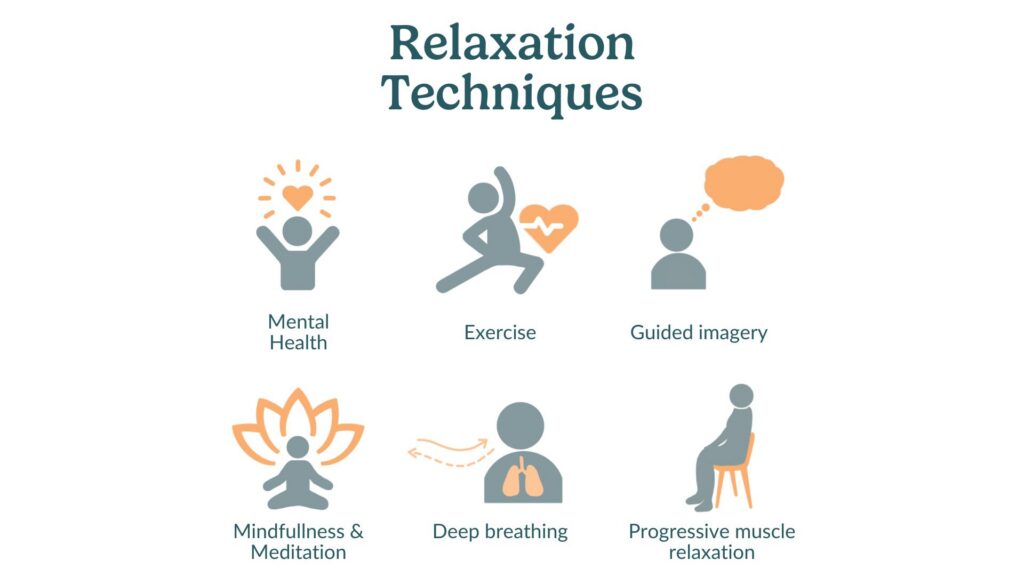
- Deep breathing: A technique involving slow, deep breaths to reduce stress and promote relaxation.
- Guided imagery: A relaxation method where you imagine peaceful and positive scenes, often with the help of a narrator.
- Mindfulness: Being fully present in the moment and aware of your thoughts and feelings without judgment.
- Meditation: Focusing your mind on a particular object, thought, or activity to achieve a mentally clear and emotionally calm state.
- Progressive muscle relaxation: Tensing and then slowly relaxing different muscle groups to reduce tension and stress.