milk bleb
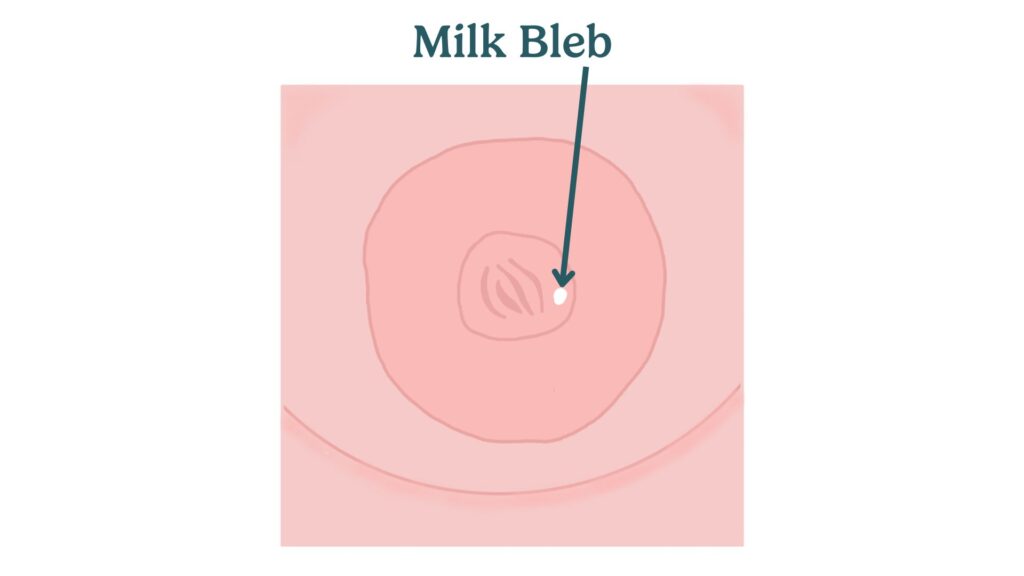
Milk bleb
A milk bleb, also known as a milk blister, is a small, white or yellow blister that forms on the nipple or areola of a breastfeeding woman. It occurs when a tiny amount of milk becomes trapped under the skin, blocking the flow of milk from one of the milk ducts. This can cause pain, swelling, and discomfort during breastfeeding. Milk blebs are typically caused by poor latch, friction from clothing or a pump, or oversupply of milk.
What to watch out for
Recognizing the signs of a milk bleb and addressing it promptly can help alleviate discomfort and prevent further issues.
Signs of a milk bleb
A milk bleb looks like a small, white or yellow dot on the nipple and may be accompanied by localized pain, swelling, and redness. The area around the bleb can feel tender, and you might experience sharp pain during breastfeeding.
Blocked milk ducts
A milk bleb can block milk flow, sometimes causing a blocked milk duct. This can cause a firm lump in your breast, localized pain, and swelling. If not addressed, it can lead to further complications like mastitis. Learn more about managing and preventing mastitis.
Poor latch
A poor latch can contribute to the formation of milk blebs by causing friction and blocking milk flow. Ensuring your baby has a deep and effective latch can help prevent and resolve milk blebs. Read more about improving latch.
How to manage a milk bleb
Taking the right steps can help clear a milk bleb and restore milk flow.
Warm compresses
Applying a warm compress to your nipple before breastfeeding can help soften the skin and open the milk duct. This can make it easier to remove the bleb and relieve pain.
Breastfeeding techniques
Continue breastfeeding on-demand to help clear the blockage. Ensure your baby has a proper latch, and try different breastfeeding positions to reduce pressure on the affected area. Learn more about breastfeeding positions.
Pain relief
Using a nipple balm can help soothe and heal the nipple. If the pain persists, over-the-counter pain relievers like ibuprofen can help manage discomfort. Always consult your healthcare provider before taking any medication while breastfeeding. We recommend using nipple balms instead of lanolin-based creams.
Professional help
If the milk bleb does not resolve with home care, or if you experience severe pain, swelling, or signs of infection, consult a lactation consultant or healthcare provider. They can provide additional treatments or guidance to help clear the bleb and prevent further issues.
Physical limitations or health circumstances
Certain conditions can make milk blebs more likely or harder to manage.
Oversupply of milk
An oversupply of milk can lead to milk blebs by causing milk to back up in the ducts. Managing your milk supply by feeding frequently and expressing excess milk can help prevent this. Learn more about managing milk supply.
Nipple trauma
Nipple trauma from poor latch, pumping, or friction can contribute to the formation of milk blebs. Ensuring proper latch and using gentle techniques can help prevent trauma and blebs. Learn more about healing sore nipples.
Milk bleb vs. nipple bleb
A milk bleb and a nipple bleb are different conditions that can occur while breastfeeding:
- Milk bleb/blister: A blocked or clogged milk duct near the nipple opening. It occurs when a small piece of skin or dried milk blocks the nipple pore, causing milk to back up behind it and form a white, yellow, or clear blister-like bump on the nipple. Milk blebs are usually painful when nursing due to the blocked duct.
- Nipple bleb/blister: Caused by friction or irritation on the nipple, often from an improper latch or use of breast pumps/nipple shields. These blisters tend to be larger, not painful, and go away once the irritation is resolved. They are not caused by a blocked milk duct.
Other terms
Understanding related terms can help you manage and prevent milk blebs more effectively.
- Blocked milk ducts: Occur when milk becomes trapped in the ducts, causing pain and swelling. Frequent breastfeeding and massage can help clear blockages. Learn more about plugged ducts.
- Mastitis: An infection that can develop from blocked ducts, causing breast pain, swelling, redness, and flu-like symptoms. Early treatment is essential. Read more about mastitis.
- Latch: How your baby attaches to your breast. A good latch helps prevent milk blebs by ensuring proper milk flow. Learn more about latch.
- Nipple balm: A soothing and healing ointment applied to the nipples to relieve pain and promote healing. We recommend using nipple balms instead of lanolin-based creams.
- Lactation consultant: A breastfeeding expert who can provide support and advice for managing milk blebs and improving latch and breastfeeding techniques.